NAZAR (RCA THESIS) · RESEARCH + PRODUCT DESIGN · 2023
Protection from the Evil Eye of Surveillance
An interactive installation leveraging computer vision and DIY counter-surveillance, using the evil eye as a symbolic & technical countermeasure. The aim was to introduce people to the basic rules to fool facial recognition algorithms.
GUIDE: DR. CAROL MCGILLIVRAY
COLLABORATOR: PRANAV BHAGWAT (DEVELOPER)
ONE MINUTE OVERVIEW
CONTEXT
Evil Eye practices are designed to misdirect the malignant gaze. Can this protection translate to biometric surveillance?
Nazar, originally a word from ancient Arabic, means ‘look, sight, surveillance, visual attention’. It refers to a protective practice against 'Evil Eye', a destructive and unpredictable curse cast by the envious gaze.
OUTCOME
'Nazar': An AI-Driven Interactive Installation
that uses computer vision (YOLO CV2 and custom Python backend) and tangible 'neo-amulets' to teach strategies for evading facial recognition, framed through the cultural metaphor of the nazar (evil eye).
Making yourself hyper-visible to humans and "invisible" to machines
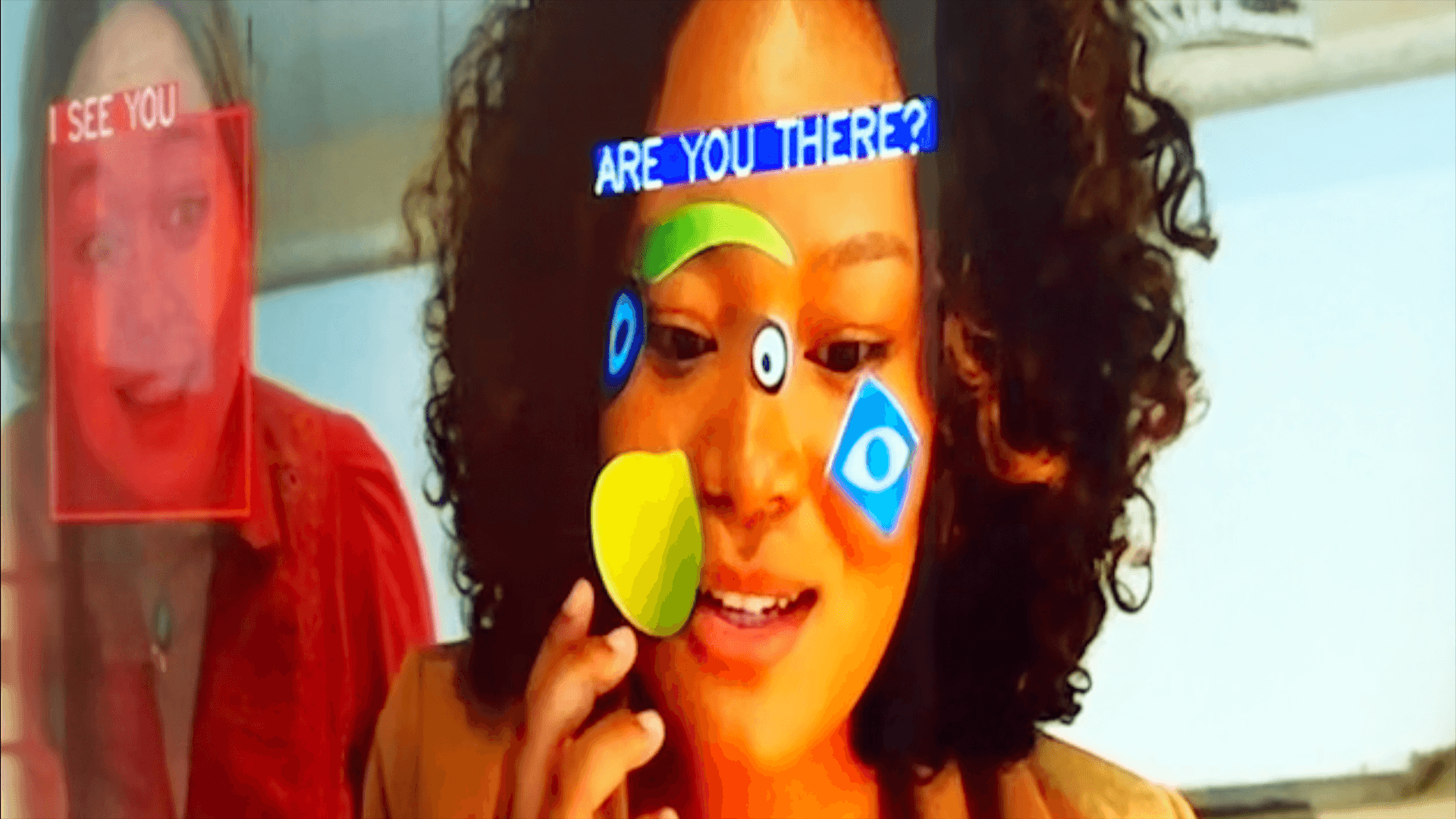
Evil Eye practices are designed to misdirect the malignant gaze. Similarly, when you use the Neo-Amulets on yourself, you're hyper-visible to other humans but invisible to computer vision. It repels a specific kind of gaze while allowing you to be visible- just like evil eye amulets.
Translating that same property to surveillance, I built upon a face camouflage technique called CV Dazzle(1), which involves creating certain colourful patterns on your face to deflect face detection algorithms.
Tangible camouflage that prevents face detection, the first step to face recognition
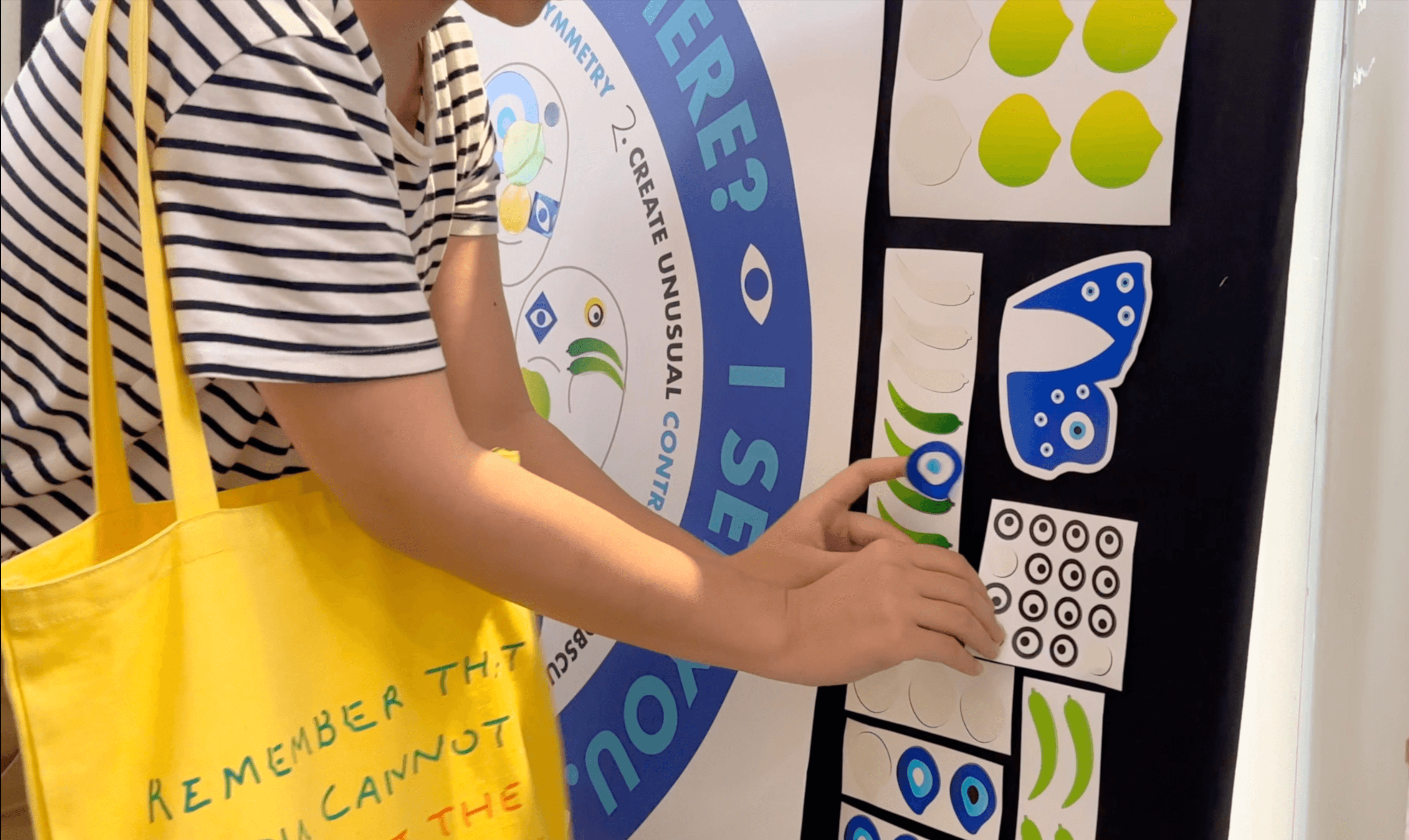
Participants designed their own tangible camouflage via the stickers to fool the algorithm with real-time feedback.
Generating a built-in feedback loop for participants
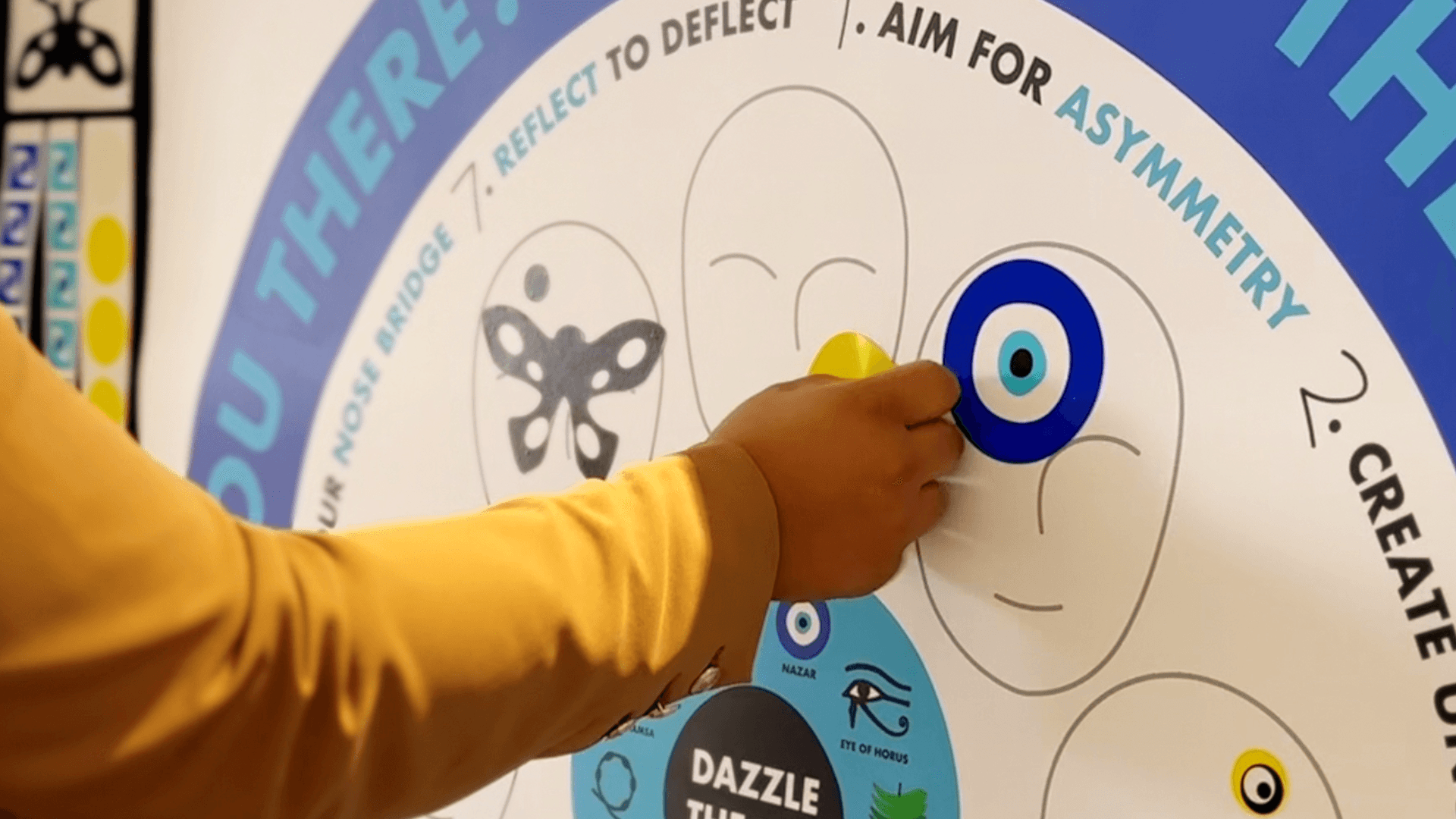
To document their successful "looks" on the poster, which also outlines the guidelines for effective deflection. In turn, the next participant could take cues from the existing generated patterns documented on the poster.
Documenting patterns unique to each participant and their process
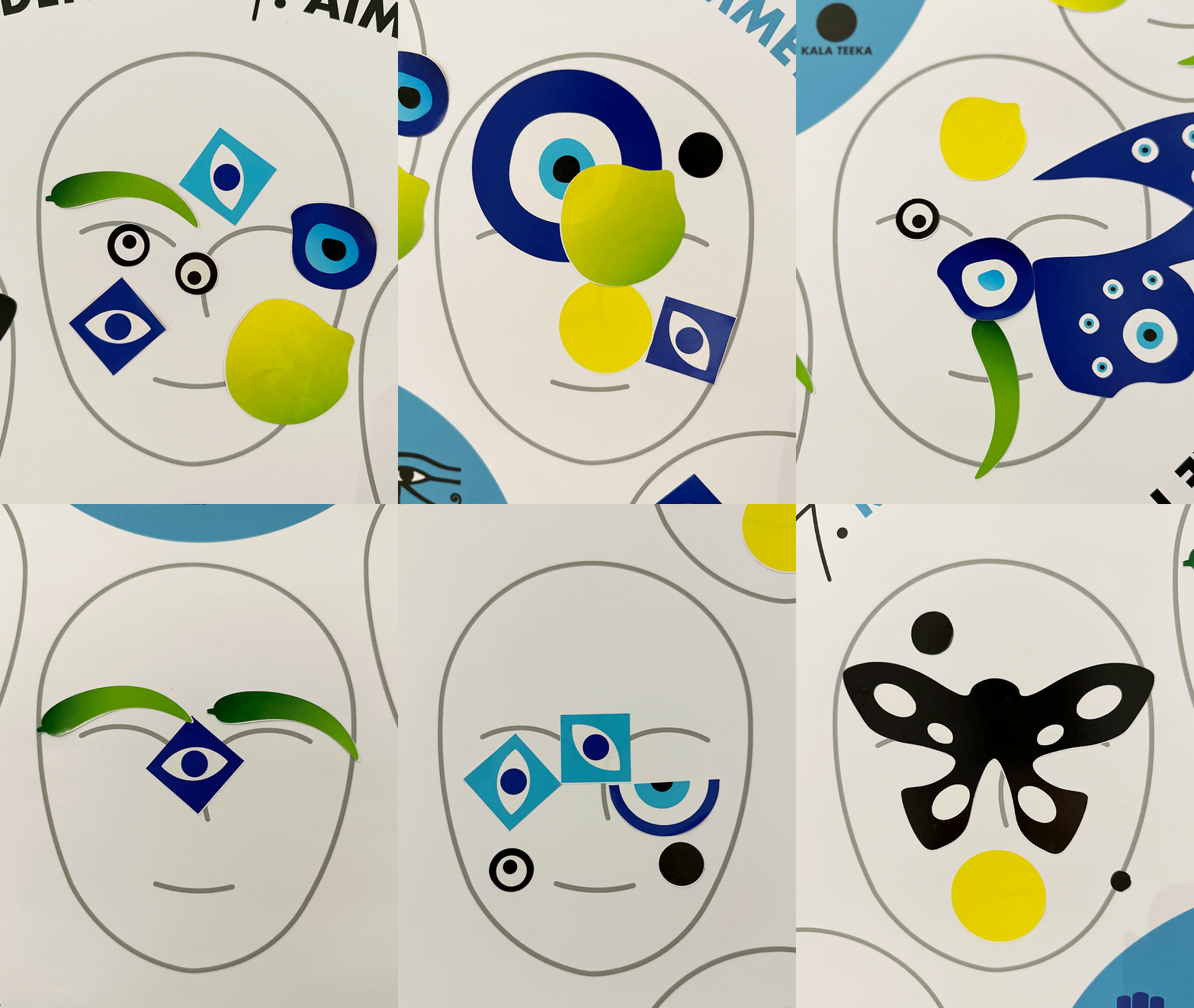
This visual loop kickstarted a lot more people to try the experience out for themselves.
…with over 50 participants that completed the 2-5 minute activity, successfully deflecting the algorithmic gaze!

RESEARCH
Meeting the Eye

Have you noticed that most of the symbols and practices that are supposed to deflect the Evil Eye look like giant eyes themselves, or something equally eye-catching: phallic figurines, a giant black dot on the face, or bright lemons and chillies.
Simulated eye contact implies consequences and constant awareness

similar to animal eyespots, another form of the protective ‘false eye’ that meets the predatory gaze.
Dazzle The Eye
Evil eye practices are designed to MISDIRECT the malignant gaze. Instead of looking at you, it gets distracted by the amulet on your person or in the surroundings. Amulets confuse, misdirect, fascinate, and dazzle the Evil Eye.
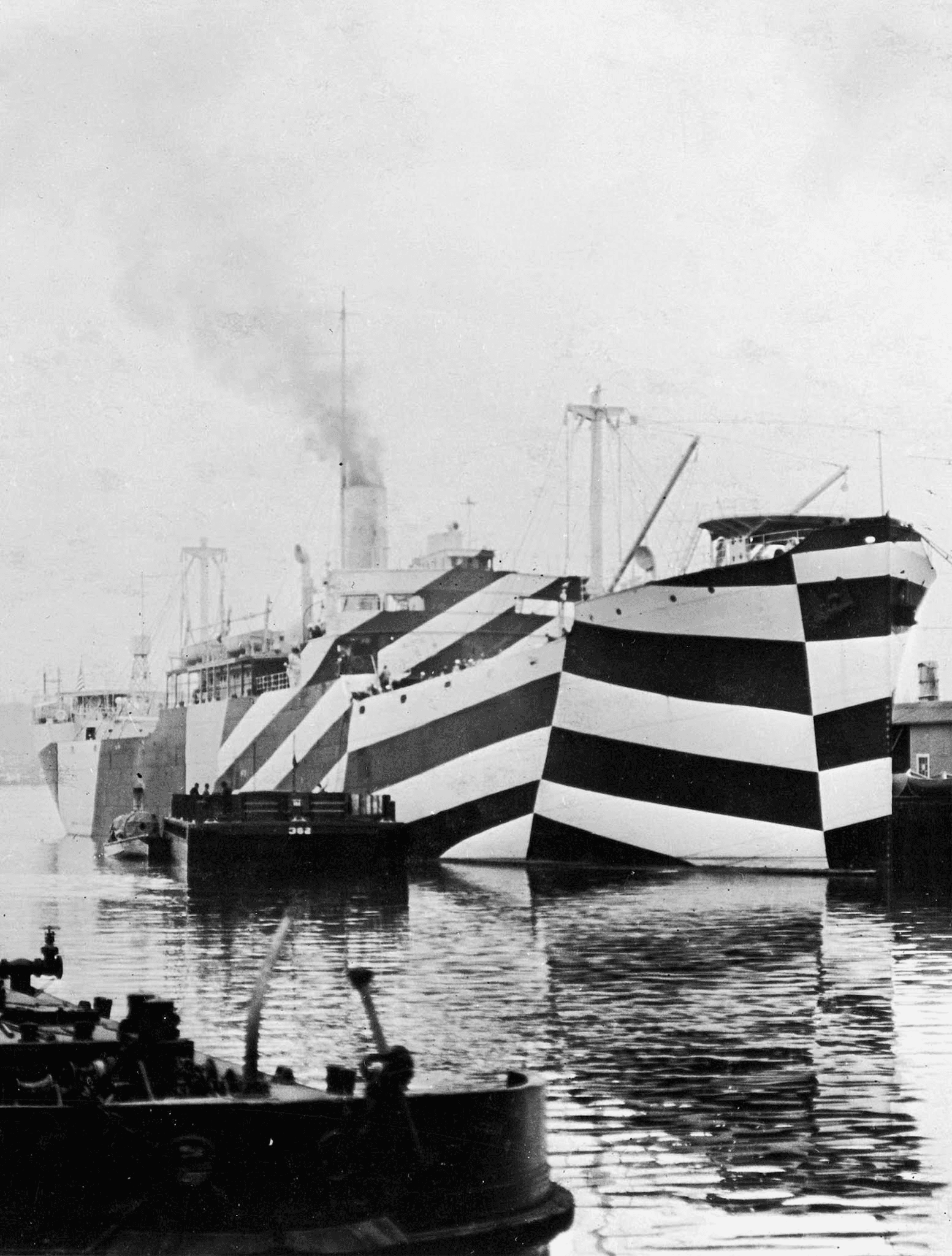
Dazzle (camouflage) is World War 1 era technology, developed by British marine artist Norman Wilkinson. Unlike other forms of camouflage, the intention of dazzle is not to conceal but to make it difficult to estimate a target's range, speed, and heading. Norman Wilkinson explained in 1919 that he had intended dazzle primarily to mislead the enemy about a ship's course and so cause them to take up a poor firing position. CV dazzle (1) is an application of the same Dazzle technology to human faces.
Connecting the dots with computer vision, face recognition and Dazzle.
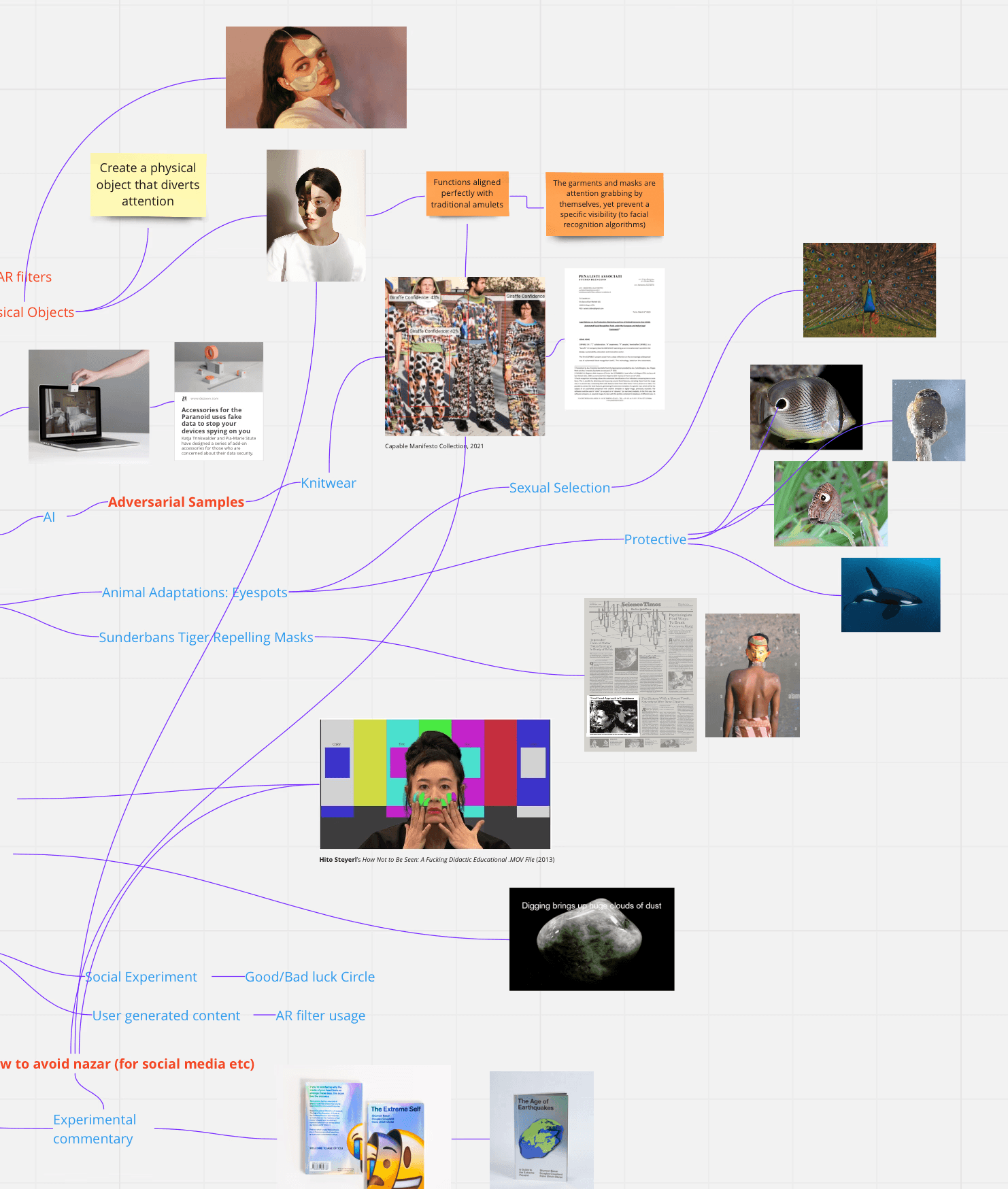
Following the research, my objective was to seek a connection between Nazar-repelling practices and Perturbation that attacks the image recognition capabilities of AI, before I connected the dots with computer vision, face recognition and Dazzle.
The Experiment:
Designing a participatory installation that gamifies the dazzle by using Nazar-inspired DIY camouflage on yourself to reduce the accuracy of the live face detection using computer vision.
IDENTITY
The Evil Eye of Surveillance
Drawing from the most recognisable symbol for the evil eye: the Nazar bead or Nazar Boncgu, I designed a logo symbol for the Nazar project that extended into a mini-branding exercise for all the different touchpoints.
The logo combined a dome CCTV camera (surveillance) and the nazar, with the interior of the camera/bead designed to resemble the red dots that show in most CCTV cameras.
On the screen interface, I animated the logo to “blink red” to symbolise surveillance captures.
TECHNICAL DEVELOPMENT
The Algorithm
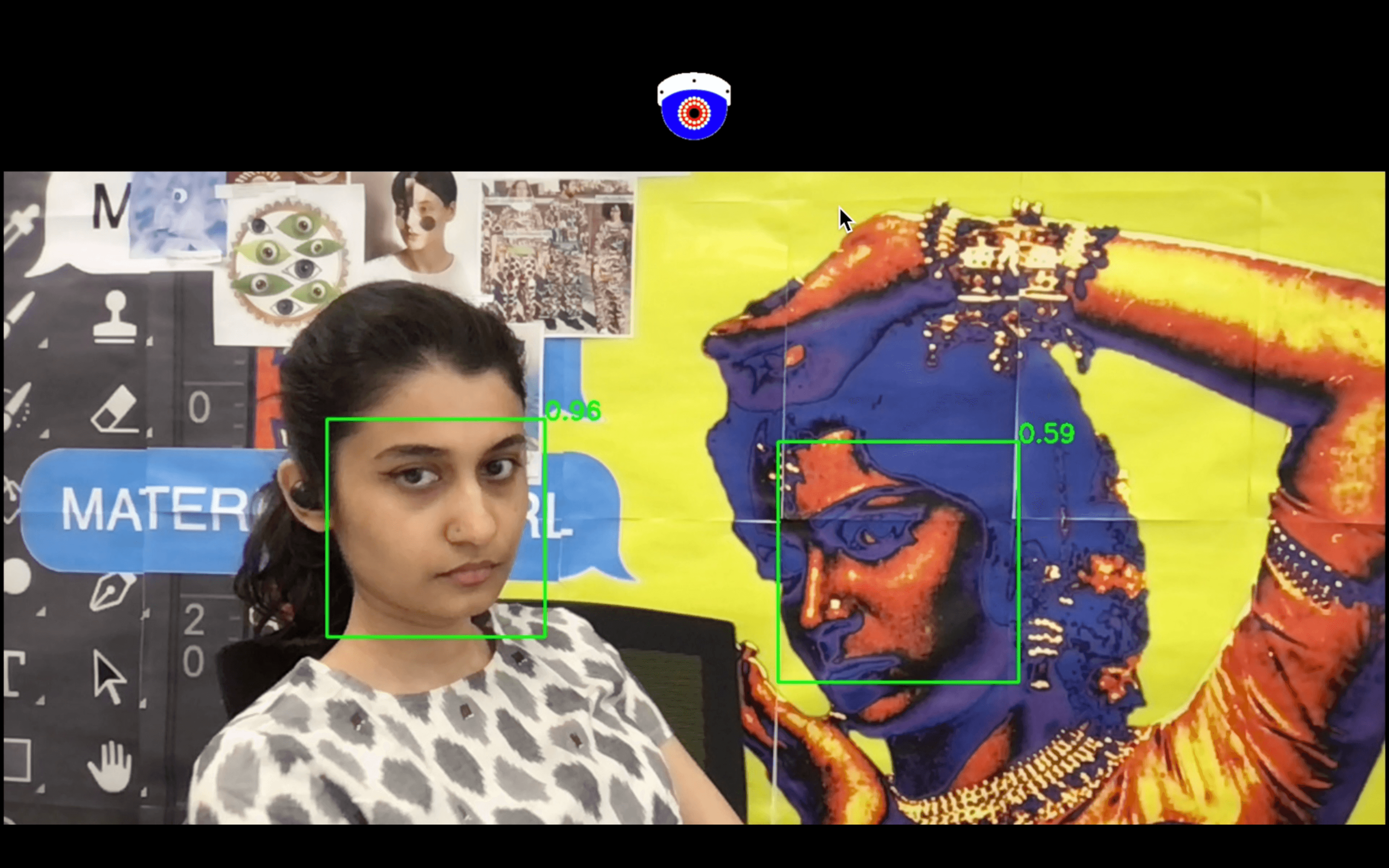
The installation consisted of a face detection algorithm that was designed to be lightweight, real-time, and highly accurate using a convolutional neural network, OpenCV-Python & Flask. It is built to have a live feed that can detect multiple users at once.
Tech Stack Diagram
The interface was developed in collaboration with Pranav (developer & ML engineer) who did all the technical heavy lifting. Life's good when your sibling is the developer to your designer.
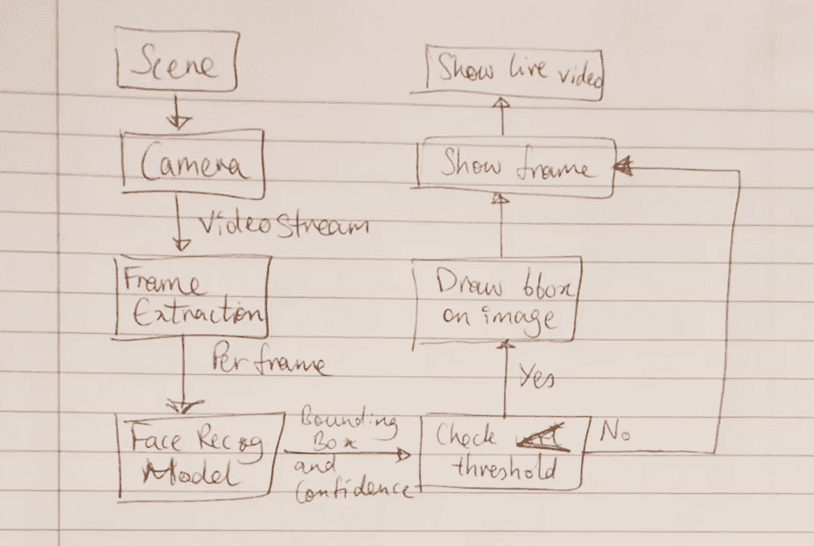
Design Decisions: Detection vs Recognition
Based on test cycles and feedback, it didn’t seem significant to the users if the detection accuracy went down from 0.99 to 0.94, even though it was a big win in terms of privacy, since the models are highly accurate at recognising human faces.
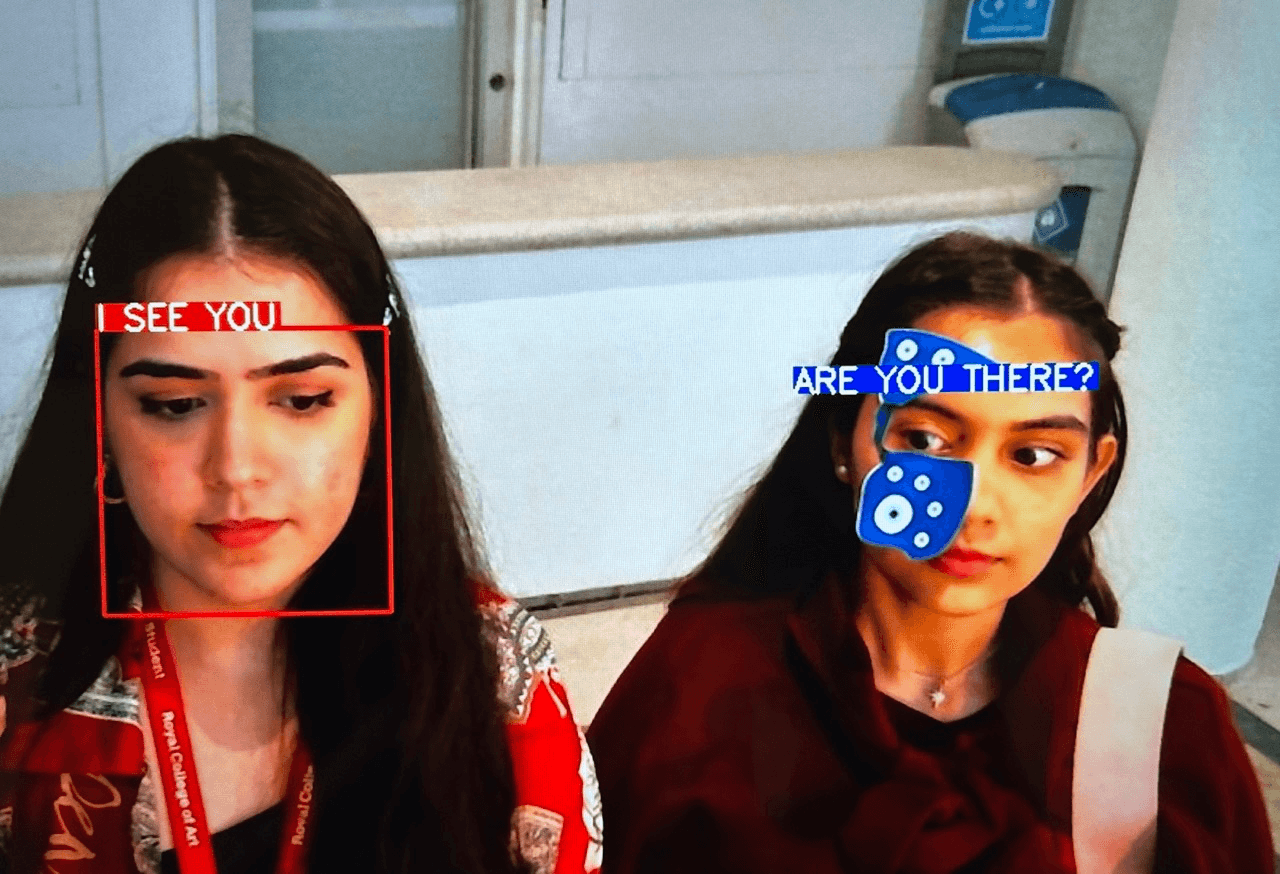
To emphasise the contrast, I replaced the numbers to make ‘detection’ vs ‘recognition’ easier to grasp. Why "Are you there?" for a successful deflection- because at this accuracy point, it cannot identify your facial features enough to recognise or implicate you, though it can still sense you're a human.
DESIGN DEVELOPMENT
Neo-Amulets, or "protective charms"
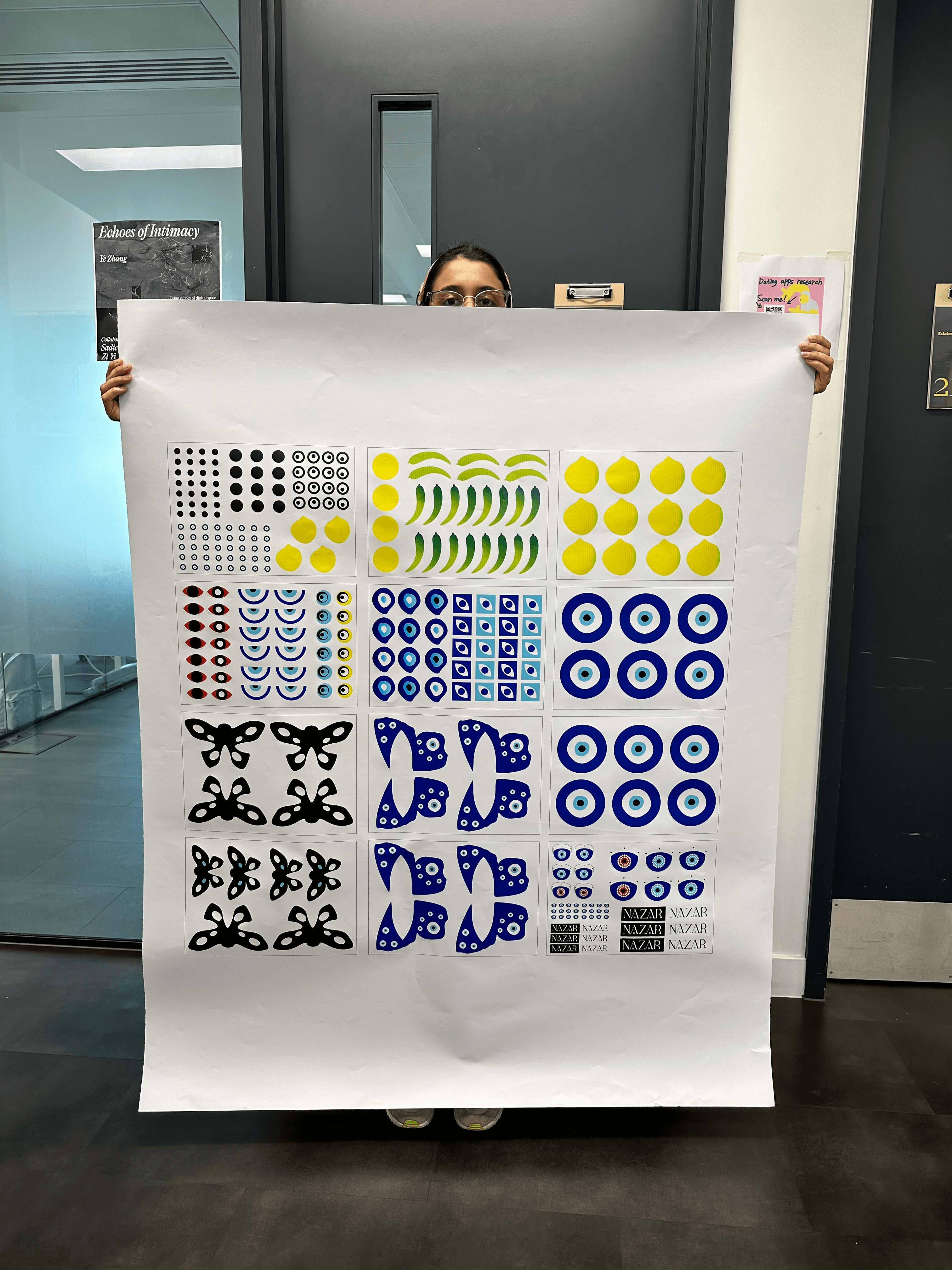
As part of my install prep, I designed stickers inspired by amulet motifs, ballroom masks, Indian bindis, and butterfly eyespots (that fool the predator’s gaze), drawing comparisons between misdirecting the evil eye, the predatory eye, and the surveilling eye.
The stickers act as neo-amulets or ‘protective charms’- a way of being looked at without being exposed to the malignant gaze.
7 Simple Rules… to Fool Facial Recognition
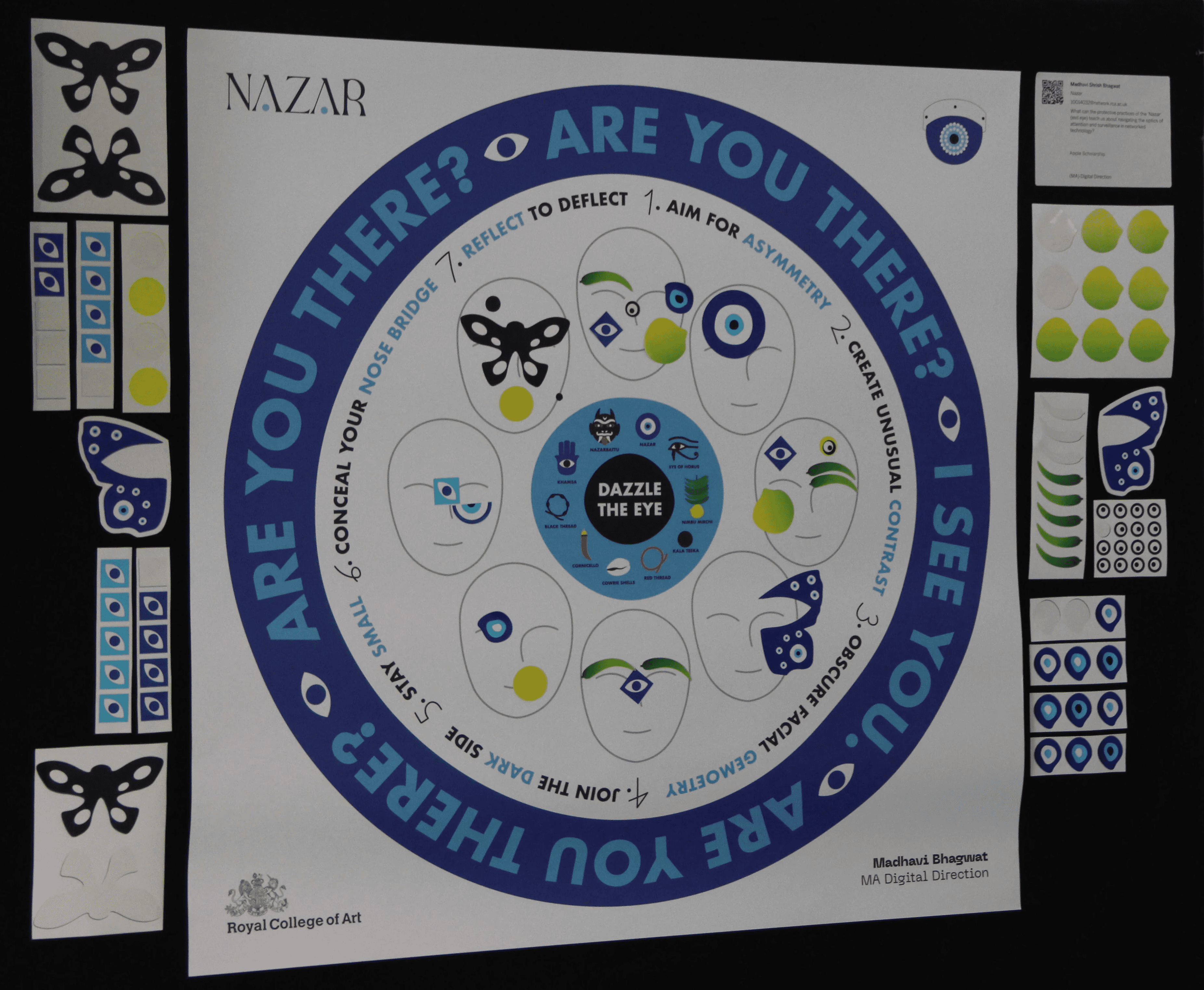
To wrangle attention from the audience, I designed my install to include a large interactive poster in the shape of a nazar bead, and a live feed ‘mirror’ which attracts people and then surprises them with the detection- which is when I would jump in to explain the project to interested visitors.
I came up with 7 catch-phrases for the How to Dazzle rules based on the feedback from my tests, which in turn informed the sticker design. For example, the rule 'Reflect to Deflect' translated directly to printing glossy over matte for a higher success rate of deflection.
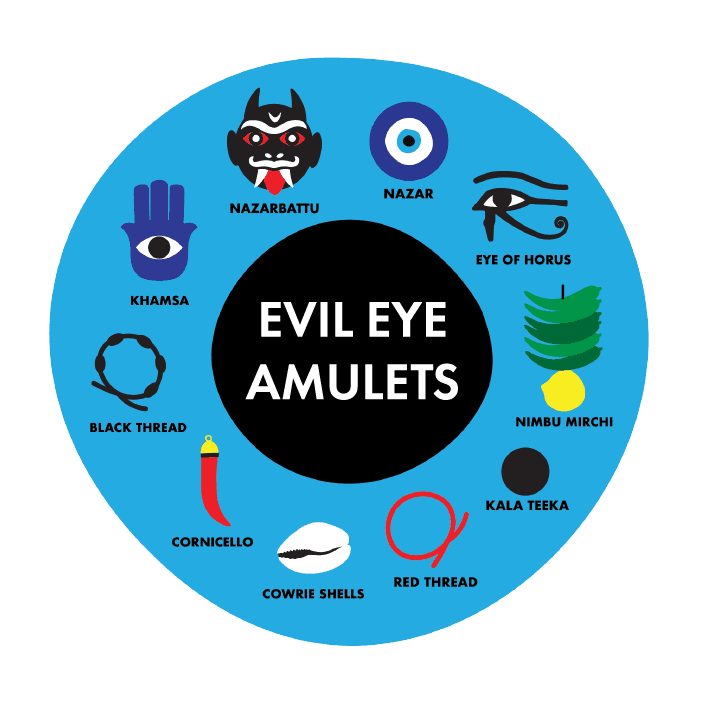
I created vector illustrations of the more commonly known nazar amulets across cultures, using the same graphic style as the symbol, to use on the poster as a reference for those who are unfamiliar with the nazar.
A DOCUMENTATION OF THE PROJECT @ THE WIP SHOW
REFLECTIONS
2 Why's and a What
WHY THIS PROJECT:
The concern around data privacy, biometric and facial recognition, and surveillance capitalism is only increasing by the day. [5] How to tell a story about protecting yourself from surveillance, while bringing in the familiar, widely used protective practise of using evil eye amulets?
WHY THIS MEDIUM:
The intention for the IRP or Independent Research Project is to follow a line of inquiry and come up with an active, technologically-enabled piece of storytelling to display at the WIP student show. Based on resaerch, user testing and my mentor's inputs, we figured that the strongest piece would be a playful, interactive approach to the subject that isn't fully digital- aka it has a strong tangible component to combat 'screen fatigue'.
I arrived at a fun blend of physical and digital elements, tangible material and intangible culture, playfulness (in its outcomes) and seriousness (in research), with audience interaction and feedback loops. This project is intended to be the first of many experiments that explore this fertile ground of evil eye + surveillance.
WHAT I WOULD DO DIFFERENTLY WITH MORE TIME:
Insight generation: Co-create an analytical model to see which patterns and which combination of patterns "scored" the highest against the defined algorithm for more specific insights into what works + why.
Spatial design: For future iterations, it would be fun to work on a more customised exhibit space beyond the screen and poster. Perhaps a custom-made device or modified CCTV in place of the screen, maybe hanging up different evil eye amulets around.
Experience: Explore creating a stronger sense of “surveillance” in the video interface and spatial sound, grainy, high up, or incognito.
KEY REFERENCES (ACADEMIC & CREATIVE)
(1) CV Dazzle, Adam Harvey Studio
(2) Incognito, Ewa Novak. 2019
(3) Manifesto Collection, Cap_able. 2021
(4) Generating adversarial patches against yolov2 (2019) Youtube. Available at: https://youtu.be/MIbFvK2S9g8 (Accessed: 12 July 2023)
ETHICS STATEMENT
All interviewees, testers and participants were informed prior and I got explicit consent to use their images for my documentation before recording or photographing. To the best of my knowledge, I ensured my outcomes are well researched and do not infringe on, mock or target the beliefs of any religious or ethnic group.